

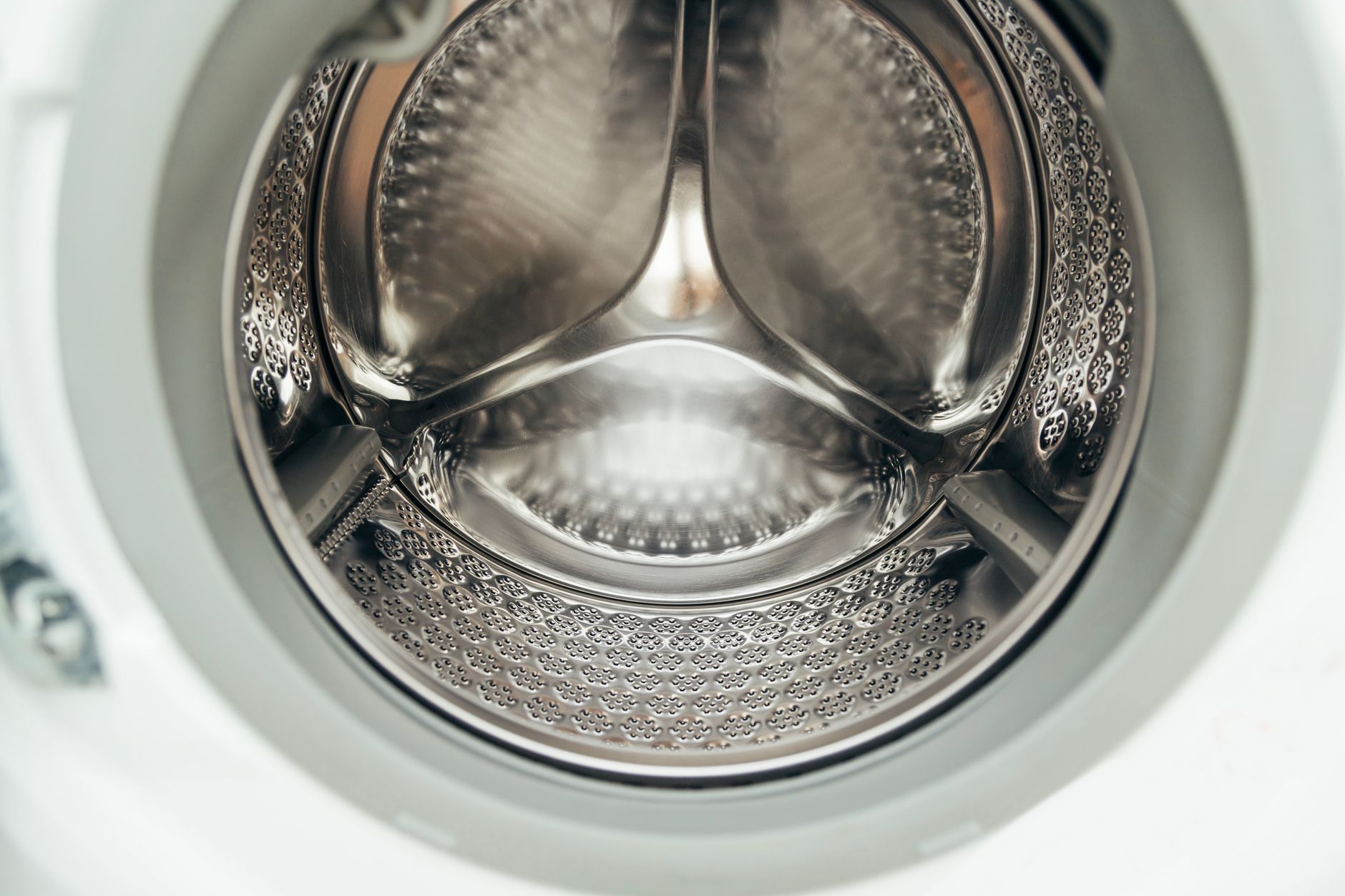
How to move a washing machine without damaging the drum
The drum is the part a move can hurt, and most of the work that protects it happens before the machine leaves the laundry. Here is how to prepare it, carry it and set it up again.

Short answer
To move a washing machine, turn off the taps and power, disconnect and drain the hoses, and empty the pump filter. On a front loader, refit the transit bolts at the back so the drum cannot swing. Keep the machine upright on a trolley, strap it in the vehicle, then remove the bolts before its first wash.
Key takeaways
- Find your model number and manual first. Bolt positions and steps differ between brands.
- Drain the hoses and, on a front loader, the water behind the pump filter.
- Refit the transit bolts on a front loader so the drum cannot bounce on its suspension.
- Move it upright. Samsung and LG both say a washer should not travel on its side, front or back.
- Remove the bolts before the first wash at the new place, then level it and check the hoses for leaks.
Jump to a section 8
Before you start: what you need
A washing machine is heavy, awkward and holds water you cannot see. Fisher & Paykel’s installation guide recommends two people just to unpack one, so plan for at least two people and a hand trolley.
Start with the model number, on a label around the door or on the back. With it you can download the manual and check where the transit bolts go and how the pump filter opens on your model. Bosch Australia’s support pages say the same: if the printed manual is gone, download it.
- The transit bolts and spacers, if you kept them.
- A spanner or socket, plus a coin for the filter cover.
- Towels and a shallow dish for the filter water.
- Tape or a bag for the hoses and cord.
- A hand trolley, straps and a moving blanket.
How to disconnect and drain a washing machine
Run the last load a day or two before, and leave the door open so the drum dries out. Then:
- Turn off the taps and unplug it. CHOICE says to make sure both the water and the power are off before you disconnect anything.
- Disconnect the inlet hoses from the taps. Hold the end over a bucket, because the hose will still hold water.
- Unhook the drain hose from the tub or standpipe. On a top loader, CHOICE suggests laying the hoses on the ground and letting gravity drain them.
- Empty the pump filter on a front loader. Most have it behind a small cover at the bottom front, often on the right. On the Fisher & Paykel model we checked, a short outlet hose behind the cover lets out about 250ml into a dish.
- Wipe up, then tape or bag the hoses and the cord to the machine so nothing drags on the floor or goes missing.
Have towels down before you open the filter
The water comes out at floor level. CHOICE suggests keeping towels handy for spills, and a shallow baking dish fits under the cover where a bucket will not.
Washing machine transit bolts: why they matter
Inside a front loader the drum hangs on springs and dampers so it can spin without shaking the house down. That suspension is built for spinning, not for a truck going over speed humps. Samsung’s guide to shipping bolts says the system is not designed to withstand the strain of moving, and that the bolts keep the tub secure and reduce vibration that could damage the suspension.
Transit bolts, also called transport or shipping bolts, lock the drum through the back panel. The Fisher & Paykel front loaders we checked use four at the rear, plus spacers and two transit rods the guide says to keep for future use. Other brands differ, which is why the manual matters.
To refit them, pop the plastic plugs out of the back panel and reverse the installation steps. LG’s support page says to reinstall them in reverse order of removal.
What if the transit bolts were thrown out?
It happens often: the bolts come out on installation day and go in the bin with the box. Contact the manufacturer or an authorised parts supplier with your model number and order the right set before moving day. Bolts are made for particular models, so a random bolt from the hardware store is not a substitute.
If they will not arrive in time, tell your removalist when you book, so the machine can be kept upright, strapped tight and loaded where it will not be knocked.
Do top loaders need transit bolts?
The transit bolt advice in the manufacturer guides we read is written for front loaders. A top loader still needs draining and its hoses secured, and some models have their own transport packing, so check your manual.
How to carry it and load it
Keep the machine upright the whole way. Samsung’s transport advice says shipping a washer on its side, front or back can damage it, and LG’s moving page says it must travel upright.
Tilt it back just enough to slide a hand trolley under, strap it on, and take stairs one step at a time with a second person below. Wrap it in a blanket before doorways, where panels get dented.
In your own car or van, CHOICE recommends standing it against the bulkhead or the back of the seats, cushioning it with blankets, and taking care closing a hatchback. Strap it so it cannot slide or tip.

Moving a laundry full of whitegoods?
Tell us what is going, the access at both ends and whether the transit bolts are still around. We will plan the move and allow the time for it.
Setting it up at the new place
This is where any damage from the move shows up, so take your time.
- Remove the transit bolts before the first wash. Fisher & Paykel’s installation guide says failure to remove them will result in damage to the washer and compromise the manufacturer’s warranty.
- Plug the holes and keep the bolts. Samsung suggests storing them safely in case you move again. A bag taped to the back works.
- Level it front to back and side to side with a spirit level, then lock the feet. Fisher & Paykel says levelling matters for good spin performance.
- Reconnect the hoses and check for leaks, then check again after 24 hours, as the same guide recommends.
- Run an empty cycle. Beko’s moving guide suggests one with no load to confirm the machine works properly.
How to move a dryer, or a stacked washer and dryer
A dryer is lighter, but a heat pump or condenser dryer has its own rules. The Fisher & Paykel heat pump dryer guide says to tip it only towards the right hand side, viewed from the front, and if it was not transported that way, to stand it upright for at least one hour before turning it on. Other makers differ, so check yours.
Empty the water tank, clean the lint filter and tape the door shut. If the dryer sits on the washer, take it down and move them separately. The same guide says a stacking kit must be used between the two, so keep its brackets and screws together for the other end.
| Job | Front loader | Top loader | Heat pump or condenser dryer |
|---|---|---|---|
| Drain it | Hoses and the pump filter | Hoses, laid on the ground | Empty the water tank |
| Lock it | Refit the transit bolts | Check the manual | Tape the door shut |
| Carry it | Upright on a trolley | Upright on a trolley | Upright, or tipped only as the manual allows |
| At the new place | Remove bolts, level, check leaks | Level, check leaks | Stand it before use if the manual says so |
When to leave it to the removalists
Plenty of people move their own washing machine with a friend and a borrowed trolley. Stairs, a narrow terrace hallway, a lift that must be booked or a laundry behind the kitchen make it harder. That is when it is worth including it in your house move.
When you book, tell us the brand and model, whether the bolts are still around, how it gets out of the laundry, and whether you will drain and disconnect it yourself. Cost depends on the time, the crew and the access at both ends, so ask us for a quote.
Common questions
Can I move a washing machine without transit bolts?
Manufacturers say not to. Samsung and LG both say to refit them before moving, because the drum’s suspension is not built for transport. If yours are lost, order a set for your model before moving day.
Can you lay a washing machine on its side to move it?
Samsung says moving a washer on its side, front or back can damage it, and LG says it must travel upright. Keep it standing and strapped.
How do I drain a front loader before moving it?
Turn off the taps and power and disconnect the hoses. Then open the small cover at the bottom front, let the water run into a shallow dish, and refit it.
What happens if I use the washing machine with the transit bolts still in?
Fisher & Paykel says it will damage the washer and compromise the warranty. Take them out and plug the holes before the first wash.
How long should a dryer stand after moving?
It depends on the model. Fisher & Paykel’s heat pump dryer guide says at least one hour upright if it was not moved the way the guide describes. Check your manual.
The short version
A washing machine is damaged by water left inside it and a drum left loose. Drain it, lock it, keep it upright, and undo the locking before the first wash.
- Get the model number and manual first.
- Turn off taps and power, then drain the hoses and pump filter.
- Refit the transit bolts on a front loader, or order replacements in time.
- Keep it upright and strapped.
- At the new place: remove the bolts, level it, check for leaks, run an empty cycle.
Moving in the Inner West or Lower North Shore?
Tell us what you are moving, including the washing machine and dryer, and anything awkward about the access at either end. We will come back with a clear quote and a plan for the day.
Get a free quote Call 0416 236 209
Based in Balmain, moving homes across Sydney and within NSW since 1989.
Sources
- How to safely move a washing machine, CHOICE
- Setting up your washing machine: removing the shipping bolts, Samsung
- How could I transport my washing machine safely?, Samsung
- What do I need to do when moving my washer?, LG
- Why does my washing machine have a transport lock?, Bosch Home Appliances Australia
- Front loading clothes washer WH1260F1 installation and user guide (NZ AU), Fisher & Paykel
- Front loader washing machine installation guide WH1160P3 (AU), Fisher & Paykel
- Heat pump condensing dryer DH8060P3 installation guide (AU NZ), Fisher & Paykel
- How to move a washing machine, Beko